
TABLE OF CONTENTS
- What Is the Credit Balances for Refund Report?
- How the Credit Balance for Refund Is Calculated?
- What Information Is Shown in the Report?
- Email Report
What Is the Credit Balances for Refund Report?
The report shows all students who need to get a refund for the FA payments received during the study.
How the Credit Balance for Refund Is Calculated?
Credit Balance for Refund is a negative difference between FA Charges and FA Payments of a student. The refund is calculated within one group or a chain of groups after the student’s transfers.
- FA Charges — a sum of all the student’s charges, except Not FA.
- FA Payments — a sum of the payments related to the Federal Student Aid, or scholarship or grant payments, including refunds and award refunds.
What Information Is Shown in the Report?
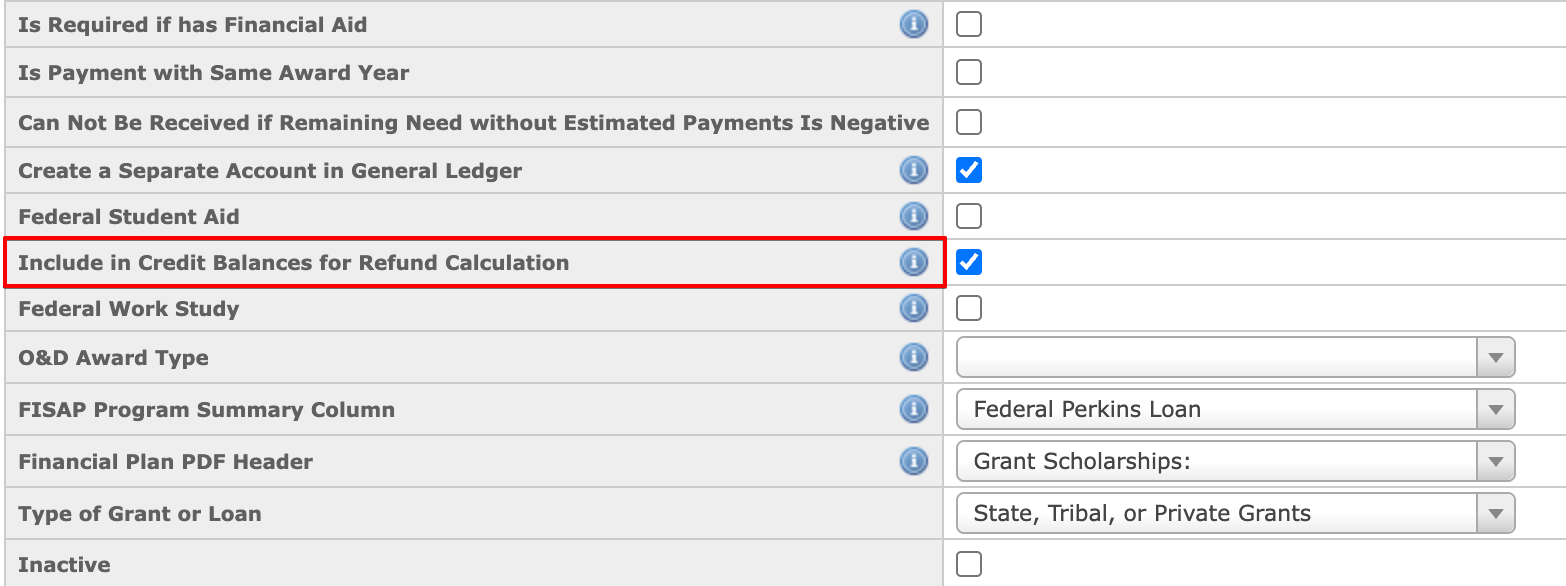
The report includes only payment periods where the period start date is on or before today’s date — future payment periods are excluded. Only payment types with the Include in Credit Balances for Refund Calculation checkbox enabled on the Edit Payment page are counted:
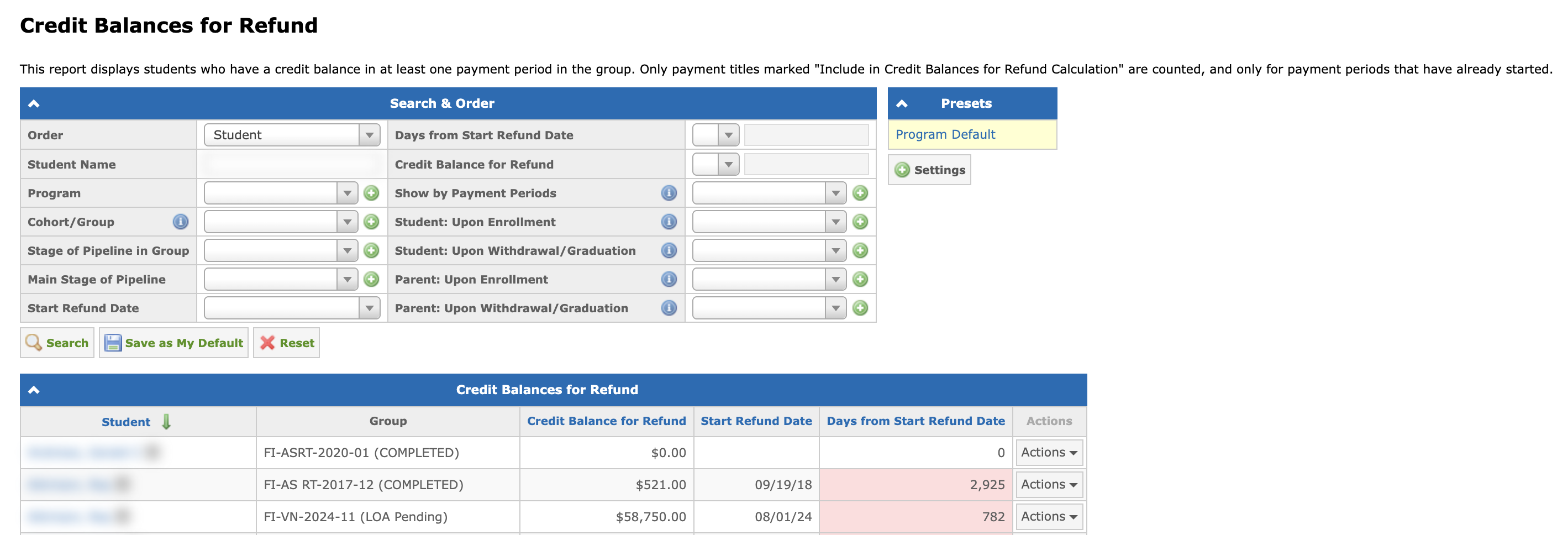
The report shows the following fields:
- Student — the student’s name. The student’s name is a hyperlink to the student’s Financial Details page.
- Group — the student’s group. If multiple groups are included in calculations due to student transfers, only the last group is shown.
- Credit Balance for Refund — the sum that needs to be refunded to a student.
- Start Refund Date — the date the refund days count started.
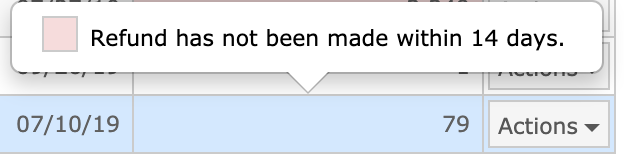
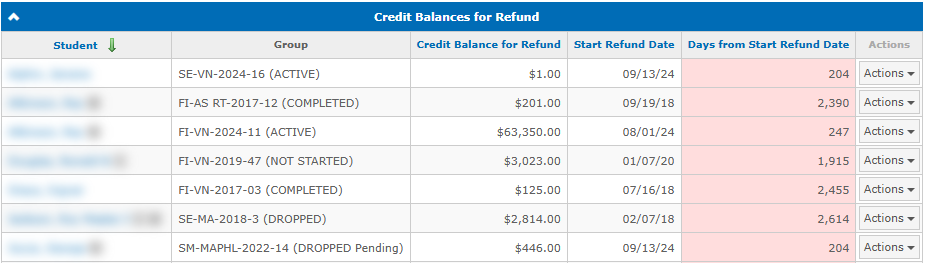
- Days from Refund Date — the number of days that had passed since the day when a refund was to be made. If this value is greater than N days, the cell is highlighted in red and hovering over the cell will display a corresponding hint.
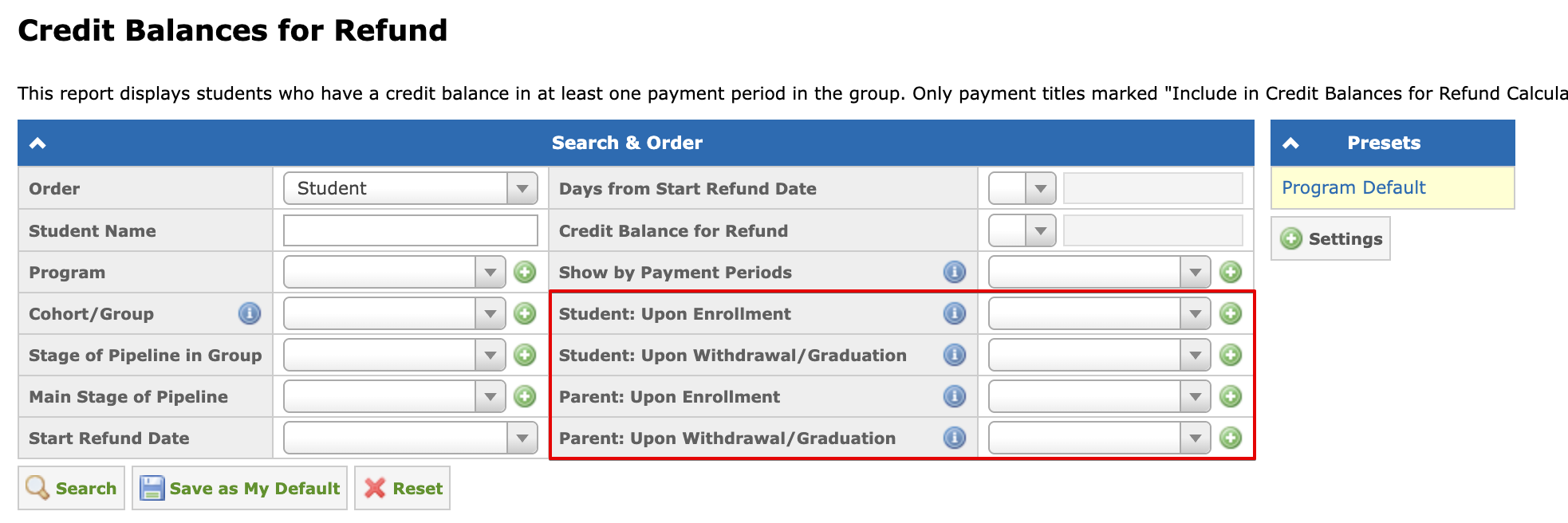
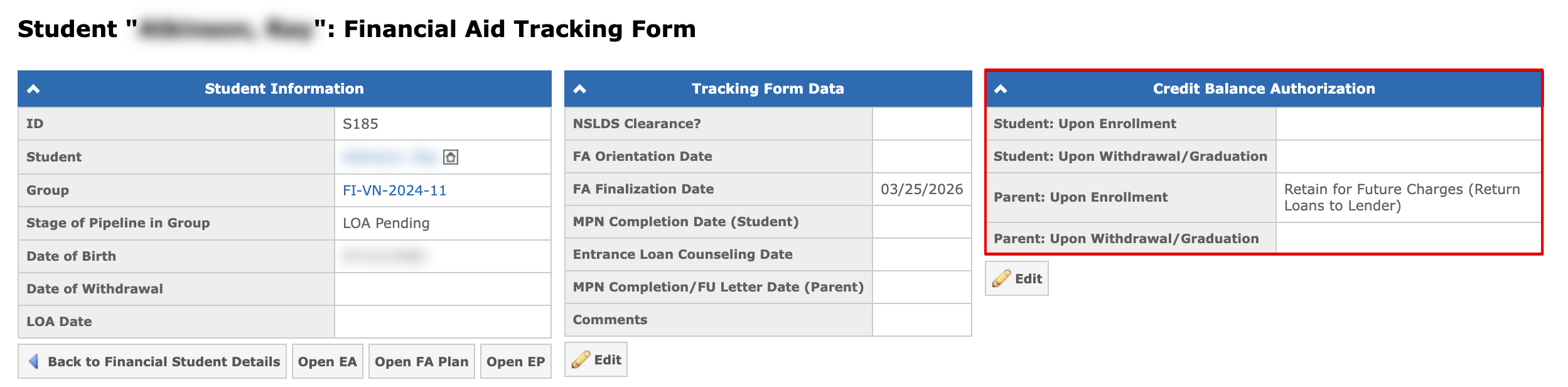
The following four columns are based on the Credit Balance Authorization fields from the FA Tracking Form. They are hidden by default and can be enabled via Presets:
- Student: Upon Enrollment — the student’s credit balance authorization upon enrollment.
- Student: Upon Withdrawal/Graduation — the student’s credit balance authorization upon withdrawal or graduation.
- Parent: Upon Enrollment — the parent’s credit balance authorization upon enrollment.
- Parent: Upon Withdrawal/Graduation — the parent’s credit balance authorization upon withdrawal or graduation
Note: N - is the value of the Period for Which a Student Must Get a Refund After Overpayment, days setting from the School Settings page.
The information in the report is updated and recalculated automatically in the background.
If the automatic calculation is in the process at the moment, the report will show a corresponding message.
The Days from Refund Date is highlighted in red if the refund is overdue:
The report can be filtered by credit balance for refund value, e.g., Credit Balance for Refund>0:
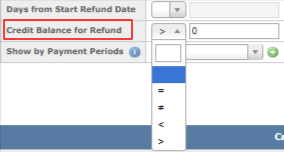
In this case, only positive values will be included in the report:
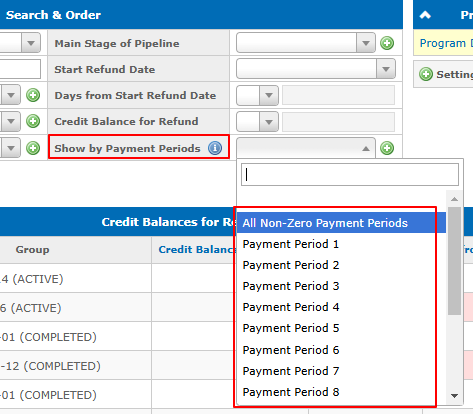
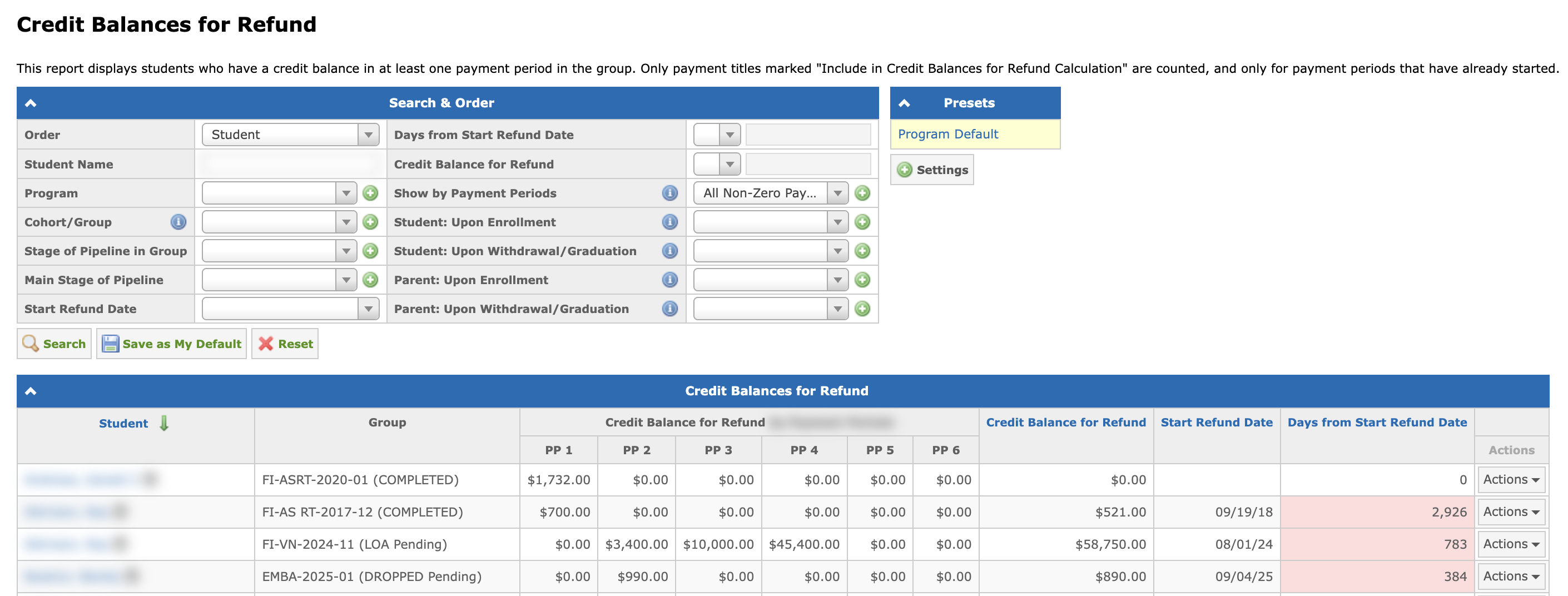
The report can be generated by payment periods:
The report can also be filtered by credit balance authorization type using the Student: Upon Enrollment, Student: Upon Withdrawal/Graduation, Parent: Upon Enrollment, and Parent: Upon Withdrawal/Graduation filters in the Search & Order section. The values in each dropdown are based on the Credit Balance Authorization fields from the FA Tracking Form:
Email Report
Also, there is a regular email report for users. This report includes all the new students from the Credit Balance for Refund report from the time the report was first sent to a user, as well as the students who have an overdue refund (not refunded in N days).
Note: N - is the number of days set in the Period for Which a Student Must Get a Refund After Overpayment, days setting in School Settings.
The notification is always sent even if there are no students in the report:
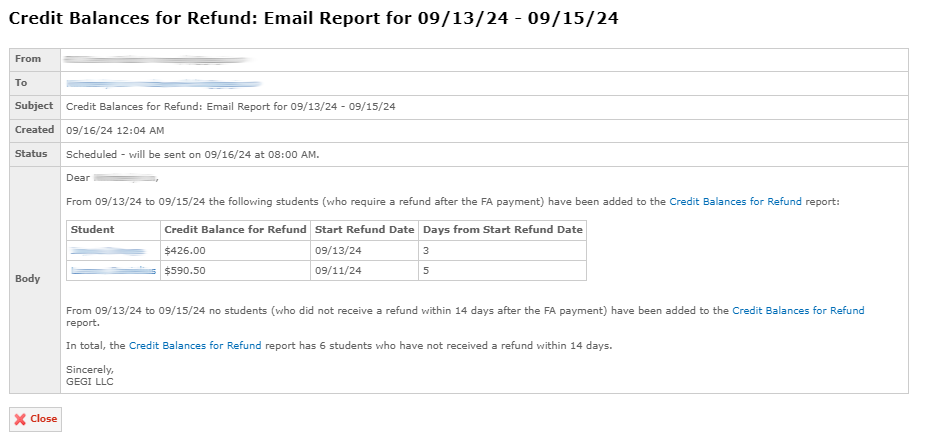
The message contains a link to a corresponding period in the Credit Balance for Refund report.
The settings for receiving the messages are now added to the My Notifications panel in My Settings.
The email notification frequency is set using Actions → Edit:

Note: Notifications are sent at 08:00 AM daily by default.